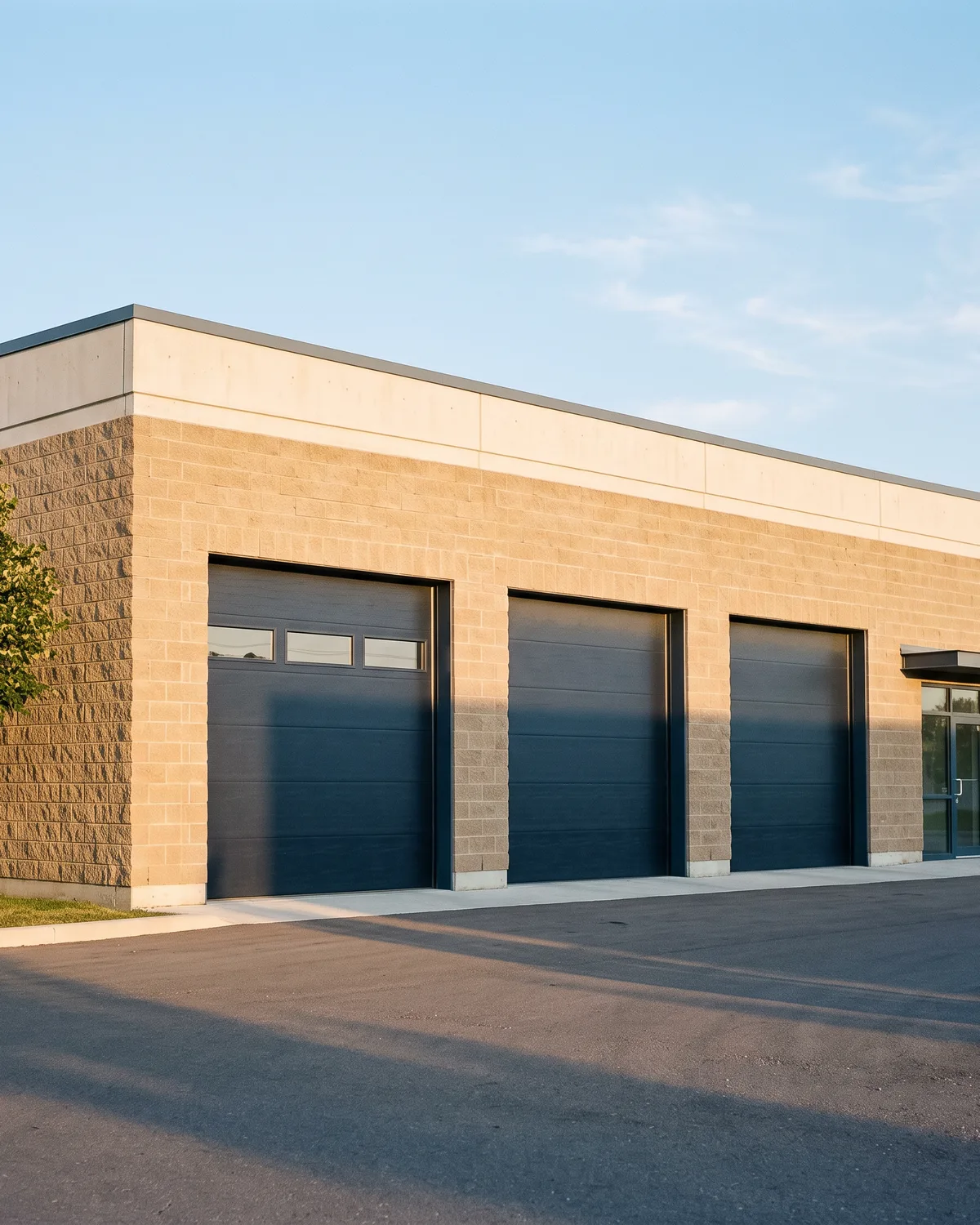
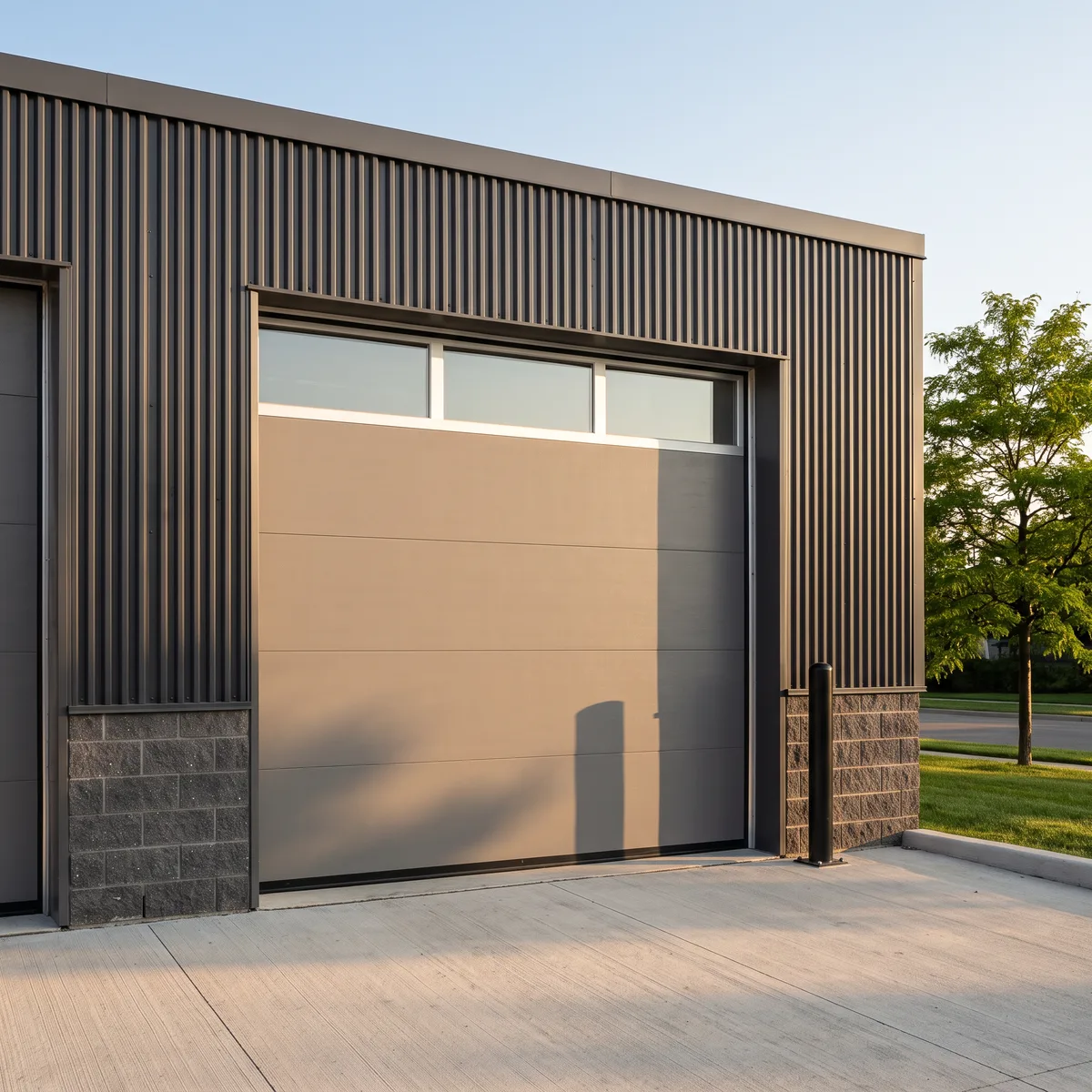
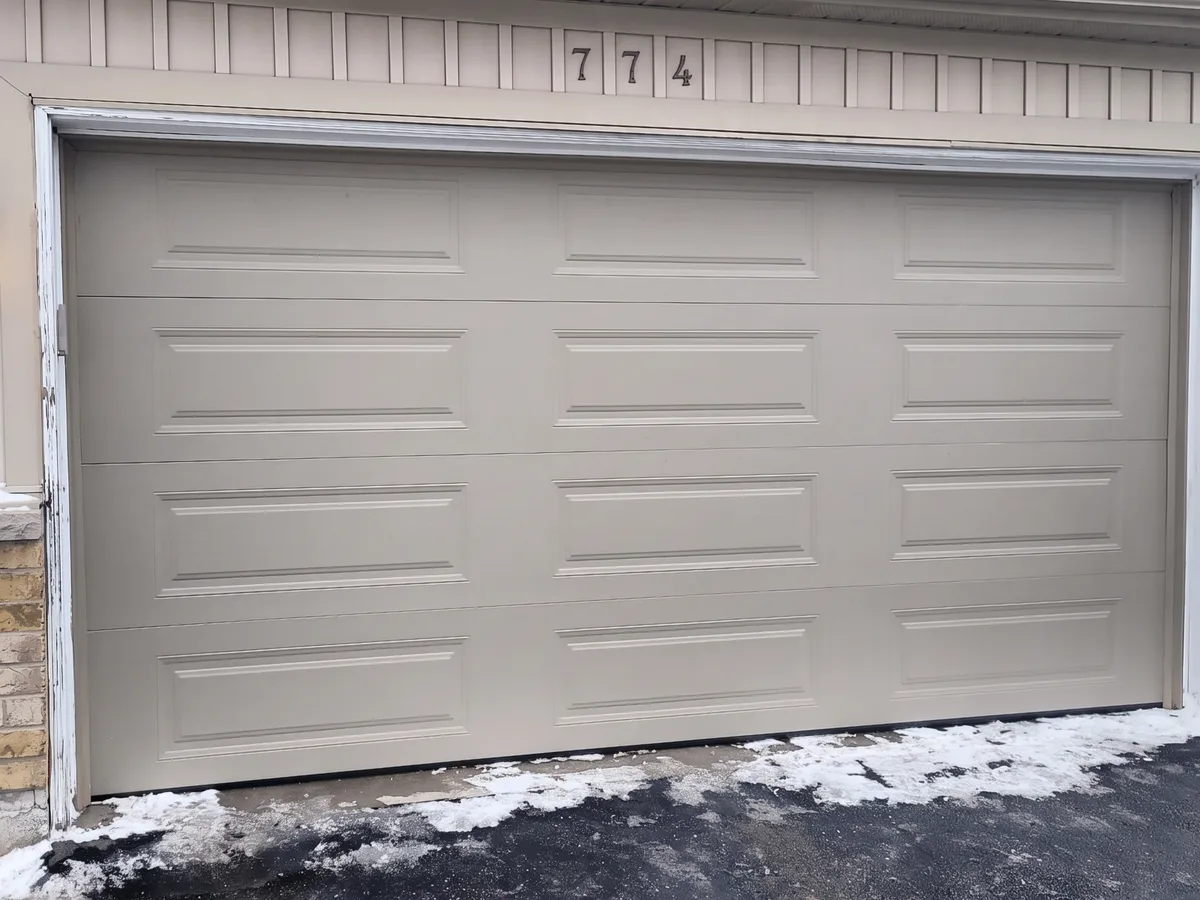
What is the difference between a commercial and a residential garage door?
The duty and the building. A commercial door is heavier gauge, with springs and an operator chosen for the bay, and the range includes high-speed and fire-rated doors a house never needs. A house door is mostly a choice of style.
What is a fire-rated or high-speed commercial overhead door?
A high-speed door opens and closes quickly to shorten the time an opening stands open, which suits a bay used all day. A fire-rated door has its own testing and inspection requirements, so it is ordered as that, not converted from a standard door.
What are high-cycle springs on a commercial overhead door?
Springs rated for 25,000, 50,000 or 100,000 cycles, against about 10,000 for a standard one. They cost more up front and less per year on a busy loading bay. When you ask a supplier, ask for the rating as a number, not as heavy-duty.
What should be checked after a forklift hits a commercial overhead door?
The tracks and framing first, since they decide whether a damaged panel can be replaced alone. Then the cables, rollers and hinges on the struck side, and the safety reversal and photo eyes before staff use the bay again.
Can a commercial garage door have windows?
Yes, windows are an option on a sectional door, which suits retail and service bays where appearance counts. Insulated sections are another. Both change the price, so tell us what the bay is used for and the quote names them.
Why won't my garage door close?
Most often it is the safety sensors. If anything breaks the invisible beam between the two photo eyes, about six inches off the floor, the door starts down and reverses. Clear the path, wipe both lenses and check that both sensor lights are steady. If the door touches the floor and then goes back up, the close limit on the opener has drifted.
How long do garage door springs last?
A standard torsion spring is often rated for about 10,000 cycles, one cycle being one open and close. At four a day that is roughly seven years; a family that uses the garage as its front door can get there in three or four. Cold winters and poor lubrication shorten it. If a door has two springs, both are replaced together.
Why won't my garage door open in cold weather?
Most often it is frozen to the floor. Meltwater pools under the bottom seal and freezes overnight, and the opener stops as if it had hit something. Break the bond with warm water or a plastic scraper, never a flame or a metal blade, and do not hold the button down. Thickened grease and cold steel can also make a tired door bind.
Why is my garage door so loud?
The sound tells you the part. Grinding is usually worn rollers, squealing means the hinges, rollers and bearings need a proper garage door lubricant, and rattling is loose hardware. A single loud bang is different: that is usually a spring snapping, so stop using the door. Nylon rollers, regular lubrication and a belt drive opener make the quietest door.
Why did my garage door remote stop working?
Try the wall button first. If it opens the door, the opener is fine and the fault is the remote: fit a new battery, even if its light still comes on. Then check that the antenna wire hangs straight down from the motor, that the lock button on the wall console is off, and that a cheap LED bulb in the opener is not jamming the signal.
How do I know if my garage door spring is broken?
Usually a loud bang from the garage, then a door that will not open or feels extremely heavy by hand. Look at the springs above the door: a broken one has a gap of a couple of inches in the coil, as if it had been cut. Do not force the door. Springs hold hundreds of pounds of stored energy and are not a DIY repair.
Is an insulated garage door worth it?
Yes, if the garage is attached, has a room above it, or is somewhere you spend time or keep a freezer or a water line. Insulated doors are also stiffer, dent less and are noticeably quieter, which owners often notice before any change in temperature. For a detached garage used only for parking and storage, the extra cost is harder to justify.
Should I repair or replace my garage door?
Repair it if the sections are straight and the fault is a spring, a cable, rollers, hinges or the opener: those are wear parts. Replacing makes sense when sections are bent or rusting through, panels are no longer made, the door is uninsulated on a heated house, or it is the third big repair in a couple of years. Modern Empire Doors says repair when it's repair.
How long does a garage door last?
The door itself usually outlasts the parts that move it. Springs, rollers, cables and openers wear by the number of cycles, so a door that opens eight times a day ages far faster than one that opens twice. Straight sections and a sound finish can keep going for many years with yearly upkeep; bent or rusting sections are what usually end a door.
What do I do if my garage door comes off its track?
Stop using it. Do not keep pressing the opener, do not lever the door back with a bar, and do not walk under it while it is stuck part open: it is under spring tension and can drop. Most off-track doors are repairable, because rollers, cables and track are replaceable parts. Forcing it is what creases the sections and turns a repair into new panels.
What should I do if a garage door cable snaps?
Leave the door where it is, keep people and pets clear and unplug the opener so nobody presses the button. Do not pull the release cord while the door is open, because it can drop or twist. The cables carry the door against the springs, so replacing them means working under full spring tension. Photograph the door inside and out, then call.
Can you open a garage door when the power is out?
Yes, by hand. Pull the red release cord hanging from the opener rail and lift the door; a balanced door lifts easily and stays put halfway. If it is very heavy, a spring may be broken, so stop. Some openers have a battery backup that keeps the door running through an outage, worth having if the garage is your main way in.
What is the quietest type of garage door opener?
A belt drive or a wall-mount opener. A belt drive uses a reinforced belt in place of a chain and is much quieter, which makes it the usual choice under a bedroom. A wall-mount model sits beside the door and turns the spring shaft directly, freeing the ceiling, but it needs torsion springs and room at the side. Chain drives are durable but the loudest.
How long does it take to install a garage door opener?
A few hours, in one visit, to replace an existing opener: the old unit comes down, the rail and motor go up, the sensors are wired and aligned, the travel and closing force are set, the auto-reverse is tested and the remotes are programmed. A first opener, a wall-mount model, an 8-foot door or a door that needs spring work first takes longer.
Will my old remotes work with a new garage door opener?
Usually not. Remotes are matched to the brand and security system of the opener, so a new opener comes with its own remotes and works with that brand's keypads. Built-in car buttons can normally be reprogrammed to it, though some cars need a small adapter. A proper installation ends with every remote, keypad and car button programmed before the installer leaves.
Can you bypass garage door safety sensors?
You should not. Taping both sensors face to face on one side of the opening makes the door close, which is exactly the problem: it removes the only thing that turns a closing door back before it touches a child, a pet or a car. If the lights are steady and the path is clear, the reversing has another cause, usually a binding track or an unbalanced door.
Why does my garage door only refuse to close at certain times of day?
Low sun shining straight into a sensor lens can blind it, and the door reverses as if something were in the way. It comes and goes at the same time each day, most often in winter, when the sun sits low. Frost or condensation on the lens does the same thing on cold mornings. Wipe both lenses, check that both lights are steady and note when it happens.
Should you lubricate garage door tracks?
No. The rollers are meant to roll along the tracks, and grease there only collects grit. Lubricate the springs, hinges, rollers, bearings and the opener rail with a purpose-made garage door lubricant, then wipe off the excess. Skip WD-40: it is a solvent, and used as a lubricant it strips what is already there. Ordinary grease turns to paste in a GTA winter.
How often should a garage door be serviced?
Once a year, ideally in autumn so the door goes into winter in good shape. A door used as the main entrance, or on a rental or commercial property, needs it more often, because wear follows the number of cycles, not the calendar. A service covers the balance, the safety reverse, lubrication, the cables, rollers and hardware, and the bottom seal.